

Oasis Agri Prescription Blended Trace Elements Nutrients and Functions – Part 7: Nickel
NICKEL (Ni)
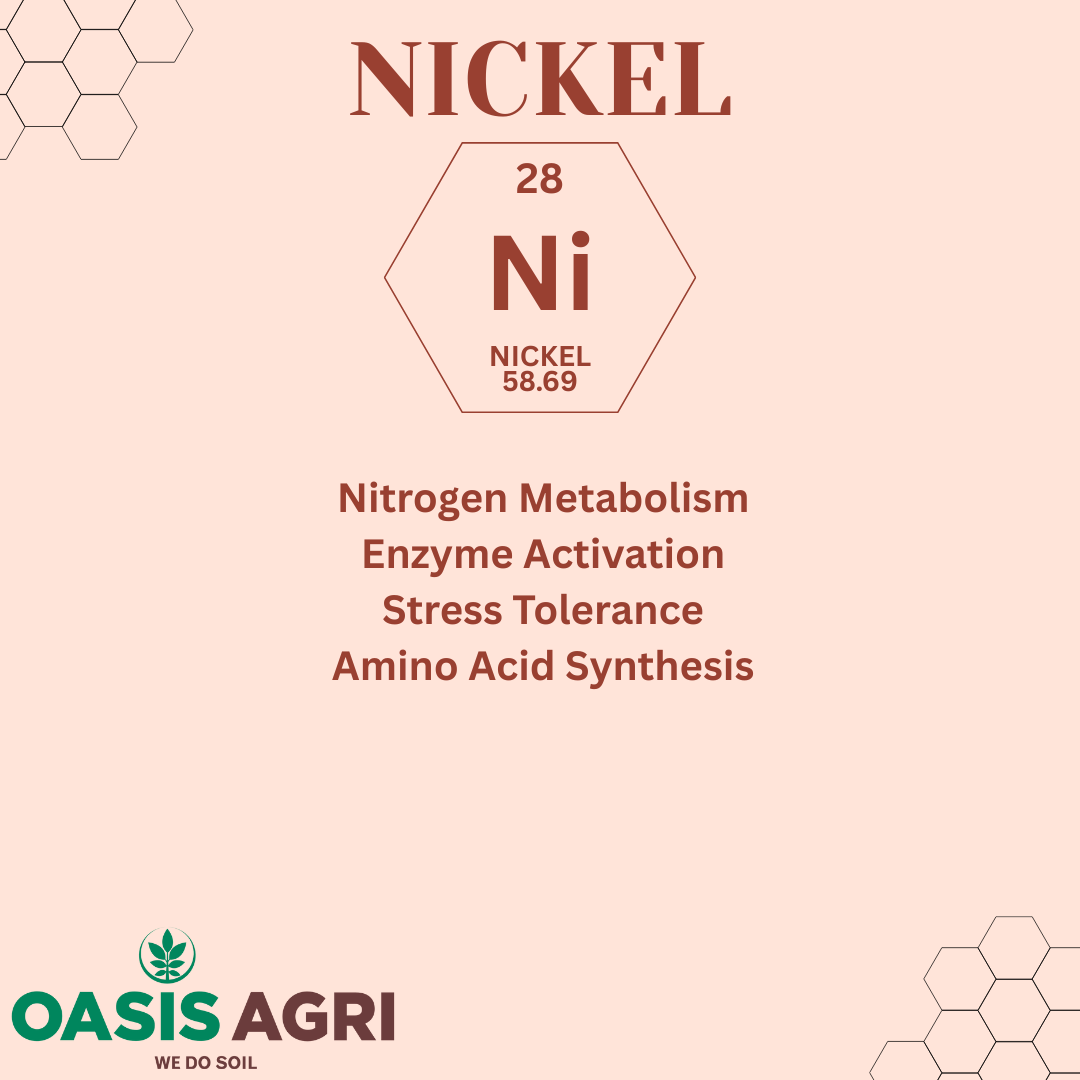
Functions in Plants and Soil:
- Nitrogen Metabolism:
Nickel is essential for activating the enzyme urease, which is necessary to convert urea into ammonia, a form of nitrogen plants can use for growth. In leguminous plants, nickel plays a role in nodulation and nitrogen fixation, helping them form symbiotic relationships with soil bacteria to get nitrogen.
- Enzyme Activation:
Nickel acts as an essential enzyme cofactor in plants.
- Stress Tolerance:
Nickel helps plants cope with environmental stresses by playing a role in the glyoxalase and glutathione cycles, which detoxify harmful compounds. It contributes to the plant’s antioxidant defense system, helping to protect cells from damage.
- Amino Acid Synthesis:
The ammonium from the urease reaction is then used along with other molecules to create amino acids, the building blocks of proteins.
Deficiency Symptoms in Plants:
Note: Deficiency symptoms can present differently depending on the crop species
- Plant Growth:
- Stunted growth with shortened internodes.
- The plant may have an abnormal overall growth pattern and distorted buds.
- Leaf Symptoms:
- Chlorosis, especially of young leaves, due to impaired nitrogen metabolism.
- The most distinctive symptom, “Mouse Ear” leaves, where leaf tips become rounded instead of pointed, and the leaf may look blunted.
- Browning and death of leaf tips due to the accumulation of toxic levels of urea.
- Cupping and wrinkling.
- Leaves and leaflets are often smaller than normal.
Oasis Agri formulates prescription blends of essential trace elements, based on soil and leaf analysis results. These blends are available in both granular form and as water-soluble powders, providing a unique solution to addressing trace element deficiency in soils.
Contact info@oasis-agri.com for more information.