
Oasis Agri Prescription Blended Trace Elements Nutrients and Functions – Part 10: Zinc
ZINC (Zn)
Functions in Plants and Soil:
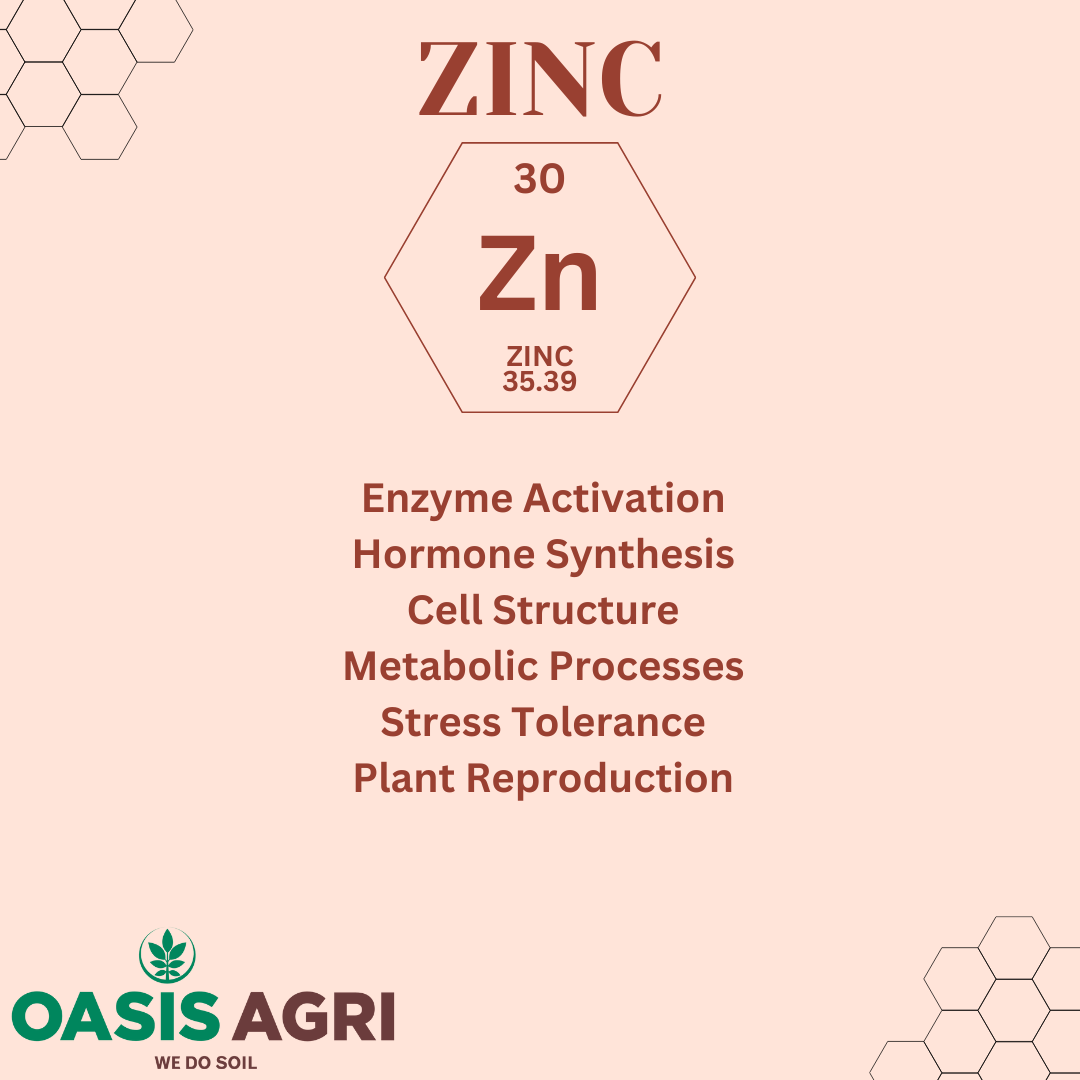
- Enzyme Activation:
Zinc acts as a co-factor for various enzymes. It can assist with enzyme structure, enzyme activation and as a helper in initiating catalytic reactions. Some of the enzymes dependent on zinc assist with carbohydrate metabolism and photosynthesis.
- Hormone Synthesis:
Zinc serves as a cofactor for enzymes involved in synthesizing the amino acid tryptophan, which is the precursor to auxin.
- Cell Structure:
Zinc functions in plant cell structure by serving as a structural component in proteins.
- Metabolic Processes:
Zinc functions in plant metabolism by acting as a cofactor for many enzymes, regulating gene expression, synthesizing the growth hormone auxin, and protecting membranes. It is crucial for photosynthesis, protein synthesis and carbohydrate metabolism.
- Stress Tolerance:
Zinc helps reduce the accumulation of damaging reactive oxygen species (ROS) by activating antioxidant enzymes.
- Plant Reproduction:
It plays a significant role in pollen formation, seed production, and the maturation of seeds and stalks.
Deficiency Symptoms in Plants:
Note: Deficiency symptoms can present differently depending on the crop species
Zinc is an immobile plant nutrient. Symptoms therefore can typically occur in the younger leaves.
- Plant Growth:
- Stunted growth (small plants with small leaves).
- Rosetting of internodes.
- Leaf Symptoms:
- Interveinal chlorosis, especially in younger leaves.
- Small or narrow leaves.
- Distorted leaf shape.
- Discolouration of leaves, bronzing or purpling, in some plant species.
- Flowers and Fruit:
- Delayed or failed blooming of flowers.
- Poor fruit set with compromised quality.
- Roots:
- Underdeveloped root system.
- Crop Specific:
- Maize:
- Broad, whitish-yellow stripes running parallel to the midrib on the upper leaves.
- Reddish-brown spots can develop in severe cases.
- Soya
- Interveinal yellowing, which can develop into a bronze or rusty color over time.
- Interveinal mottling.
- Maize:
Oasis Agri formulates prescription blends of essential trace elements, based on soil and leaf analysis results. These blends are available in both granular form and as water-soluble powders, providing a unique solution to addressing trace element deficiency in soils.
Contact info@oasis-agri.com for more information.