

Oasis Agri Prescription Blended Trace Elements Nutrients and Functions – Part 6: Molybdenum
MOLYBDENUM (Mo)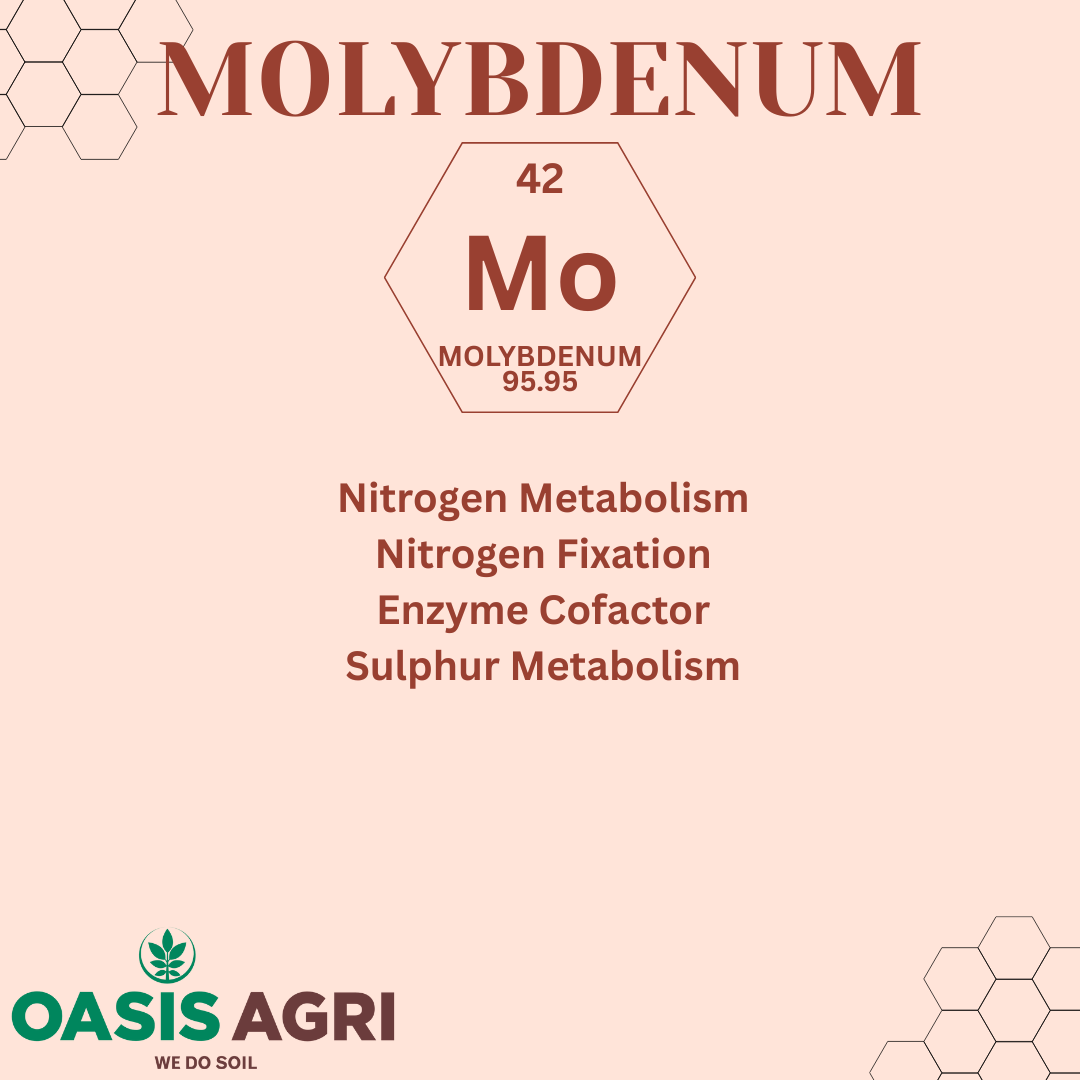
Functions in Plants and Soil:
- Nitrogen Metabolism:
Molybdenum is essential for the enzyme nitrate reductase break down nitrates absorbed from the soil into nitrite.
- Nitrogen Fixation:
In legumes, molybdenum is vital for the bacteria in root nodules to convert nitrogen gas from the air into ammonia, which the plant can use.
- Enzyme Cofactor:
Molybdenum acts as a cofactor for several other important enzymes that aid in plant metabolism, including those involved in sulfur metabolism and hormone synthesis.
- Sulphur Metabolism:
Molybdenum acts as a cofactor for the enzyme sulfite oxidase, which converts sulfite into sulfate. This process is essential for creating the sulfate that plants need to build sulfur-containing compounds like amino acids, which are critical for protein production and overall growth.
Deficiency Symptoms in Plants:
Note: Deficiency symptoms can present differently depending on the crop species
- Stunted Growth:
- There is a general failure to develop to full size. There is often an associated reduction in flowering and fruiting.
- Yellowing Leaves:
- General yellowing or interveinal chlorosis first occurring in the older leaves. This is due to the link between nitrogen metabolism and molybdenum.
- Leaf Edge Scorching:
- The edges of the leaves may die back and become brown.
- Crop Specific:
- Crucifers:
- Molybdenum deficiency often presents a “whiptail” in broccoli and cauliflower. The midrib grows but the leaf blade is stunted.
- Legumes:
- Stunted and yellow appearance due to poor nitrogen fixation.
- Citrus:
- Large, yellow, interveinal spots appear on the leaves. These can develop brown gum deposits and, in severe cases, cause leaves to drop.
- Crucifers: